Amal Davis
Listen to this article
Press play to start
Your website might look “fine.”
It might even get traffic.
But the real question is:
Is it generating consistent leads and business growth?
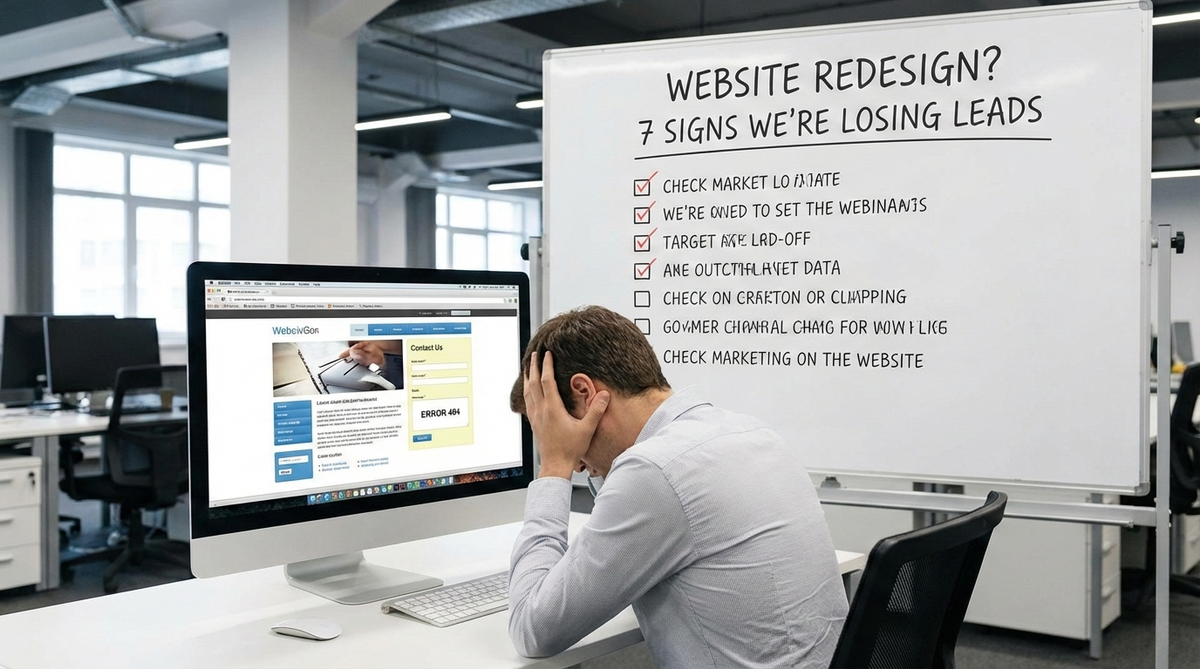
Many companies delay redesigning their website because it still “works.” However, in competitive markets, an outdated or underperforming website silently reduces conversions, rankings, and brand credibility.
In this guide, we’ll explain when a website redesign becomes necessary, how it impacts SEO and conversions, and what modern businesses must prioritize in 2026.
Users form an opinion about your business in less than 3 seconds.
If competitors have:
…while your site feels cluttered or old-fashioned, trust immediately drops.
A redesign isn’t about aesthetics alone. It’s about aligning your digital presence with current user expectations and industry standards.
Businesses investing in professional web development services often see noticeable improvements in user engagement and enquiry rates after upgrading their design structure.
Speed directly affects:
If your website takes more than 3 seconds to load, you’re likely losing potential leads.
Common reasons include:
A proper website upgrade focuses on performance optimization, clean architecture, and lightweight frameworks rather than cosmetic changes alone.
Over 60% of traffic comes from mobile devices.
If users need to:
…your website is already costing you business.
Modern website development prioritizes mobile-first design, ensuring the layout adapts seamlessly across devices.
A well-structured, mobile-responsive site improves both SEO performance and user satisfaction.
This is one of the most dangerous signs.
If analytics show:
Your website likely lacks conversion optimization.
A redesign should include:
Conversion-focused design transforms visitors into actual leads.
Many websites struggle to rank because of technical issues such as:
A redesign is an opportunity to rebuild the site with proper technical SEO foundations.
For businesses serious about organic visibility, working with an experienced custom website development company ensures the structure supports long-term search performance rather than temporary fixes.
If adding a new page feels complicated or breaks layout consistency, your backend architecture is limiting growth.
Scalable websites allow you to:
Without scalability, you’ll eventually need a complete rebuild—often at a higher cost.
Businesses evolve.
Your website should reflect:
An outdated site can signal stagnation—even if your business has grown significantly.
A modern redesign aligns your digital identity with your actual business capabilities.
A proper redesign is not just visual editing. It must address:
Businesses that approach redesign strategically often see:
If your website is built on rigid templates or outdated frameworks, rebuilding may be the smarter long-term decision.
Investing in scalable website development solutions ensures your next upgrade won’t require another rebuild in two years.
Many businesses redesign only after:
By then, recovery takes longer.
A proactive website upgrade ensures your digital presence stays competitive, optimized, and aligned with growth goals.
Your website is not just an online presence—it is your primary digital sales system.
If it isn’t performing at its full potential, it’s time to rethink its structure.